Skip to Content Skip to Footer
Home
The Live Well logo features a modern design promoting a healthy, balanced lifestyle
Search
  • Español
  • Ellyn Satter
    • Ellyn Satter
      Prenatal / Postpartum
    • Ellyn Satter
      Newborn / Infant
    • Ellyn Satter
      Older Baby / Almost Toddler
    • Ellyn Satter
      Toddler / Preschooler
  • Breastfeeding
  • Eat·Grow·Live Healthy
    • Eat·Grow·Live Healthy
      Women
    • Eat·Grow·Live Healthy
      Infants
    • Eat·Grow·Live Healthy
      Children
    • Eat·Grow·Live Healthy
      Fathers
  • Live Well Blog
  • Videos
  • Approved Food List
    • Approved Food List
      Choctaw Nation
    • Approved Food List
      Chickasaw Nation
    • Approved Food List
      ITCO
    • Approved Food List
      Osage Nation
    • Approved Food List
      WCD
    • Approved Food List
      Approved Food List Oklahoma
banner-dairy-women-food

Live Well Blog

  • Home
  • Live Well Blog
Finding Calm When Life Gets Busy: Stress-Management for Parents
February 11, 2026General /FamilyRecipes

Finding Calm When Life Gets Busy: Stress-Management for Parents

Finding Calm When Life Gets Busy Parenting is full of love, joy, and often times, stress. Between caring for little ones, managing meals, grocery shopping, budgets, jobs, and everything else,…

Read More
0
February Is National Heart Month: Simple Ways to Show Your Heart Some Love
February 4, 2026General /Family

February Is National Heart Month: Simple Ways to Show Your Heart Some Love

Simple Ways to Show Your Heart Some Love Your heart works hard for you every single day. February is National Heart Month – a great time to learn small, simple…

Read More
1
10 Ways to Enjoy Avocados – And Helpful Tips to Feed with Confidence
January 28, 2026General /Family

10 Ways to Enjoy Avocados – And Helpful Tips to Feed with Confidence

10 Ways to Enjoy Avocados – And Helpful Tips to Feed with Confidence Ahh, the amazing avocado. So many varieties to enjoy, and so many ways to enjoy them! Avocados…

Read More
0
Food, Feelings, and Finding Balance: Understanding Disordered Eating
January 21, 2026General /Family

Food, Feelings, and Finding Balance: Understanding Disordered Eating

Food, Feelings, and Finding Balance: Understanding Disordered Eating Kelli almost spilled her morning coffee when she heard her 4-year-old say, “I’m getting fat. I need to lose weight.”Her heart sank.…

Read More
1
Liquid Calories – Time to Rethink  Your Drink?
January 14, 2026General /Family

Liquid Calories – Time to Rethink Your Drink?

When Drinks Add Up Nilea loved starting her day with a big cup of coffee and flavored creamer. In the afternoon, she reached for a 20-ounce soda to stay awake.…

Read More
0
Baby Blues… or  Is It Something More?
January 7, 2026Women

Baby Blues… or Is It Something More?

Baby Blues… or Is It Something More? It’s very common to feel emotional after having a baby. Your body is healing, your hormones are changing, and life looks very different…

Read More
2
Is the Chia Seed Challenge Worth It?
December 31, 2025General /FamilyRecipes

Is the Chia Seed Challenge Worth It?

Is the Chia Seed Challenge Worth It? If you’ve spent time on TikTok or Instagram, you may have seen people trying the 30-day chia seed challenge. It’s gotten a lot…

Read More
0
Gut Health and Gestational Diabetes
December 24, 2025Women

Gut Health and Gestational Diabetes

Gut Health and Gestational Diabetes Ana Sofia was pregnant again, and this time she wanted things to go differently. During her last pregnancy, she had gestational diabetes – a type…

Read More
0
The Basics of Paced Bottle-Feeding
December 17, 2025Infant

The Basics of Paced Bottle-Feeding

The Basics of Paced Bottle-Feeding Paced bottle-feeding helps your baby eat slowly and take breaks – just like they would if they were breastfeeding. It can also help prevent overfeeding…

Read More
0
Extra Vegetables Quiche
December 10, 2025Recipes

Extra Vegetables Quiche

Colorful Quiche Got leftover vegetables? Great! Turn them into a cheesy egg pie with a caramelized onion crust. This colorful quiche is a great way to use up leftover vegetables…

Read More
0
How Do I Know If My Baby Could Be Tongue-Tied?
December 3, 2025Infant

How Do I Know If My Baby Could Be Tongue-Tied?

How Do I Know If My Baby Could Be Tongue-Tied? A tongue-tie happens when the little string under your baby’s tongue is too tight or short. This can make it…

Read More
0
What Is Postpartum Depression?
November 26, 2025General /Family

What Is Postpartum Depression?

What Is Postpartum Depression? Having a baby can bring big changes.Moms and dads often feel joy, love, and excitement. But sometimes, they can feel sad, worried, or alone. If these…

Read More
0
Load More
Oklahoma Wic Logo
  • Contact Us

This institution is an equal opportunity provider.

Cookie PolicyPrivacy Policy

© Brush Art Corporation

  • Email
  • SMS
If you are using multiple emails, separate them with commas.

    Share

    Share this link via:

    hand-expierence

    HAND EXPRESSION

    How it works

    Use your hand to gently massage and compress your breast to remove milk.

    What’s Involved

    • Requires practice, skill, and coordination.
    • Gets easier with practice and can be as fast as pumping.
    • Good if you are not often away from your baby or you need an option that is always with you. All moms should know how to hand express, in case they need to do it unexpectedly.

    Average Cost

    Free

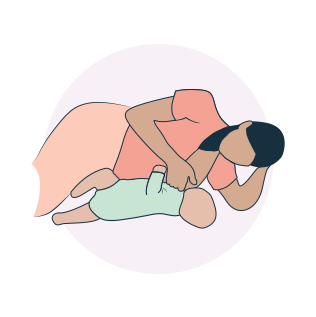
    Side-Lying Hold Image

    Side-Lying Hold

    1. For the right breast, lie on your right side with your baby facing you.
    2. Pull your baby close. Your baby’s mouth should be level with your nipple.
    3. In this position, you can cradle your baby’s back with your left arm and support yourself with your right arm and/or pillows.
    4. Keep loose clothing and bedding away from your baby.
    5. Reverse for the left breast.

    This hold is useful when:

    • You had a C-section
    • You want to rest while baby feeds
    • You are breastfeeding in the middle of the night
    • You and your baby are comfortable in this position
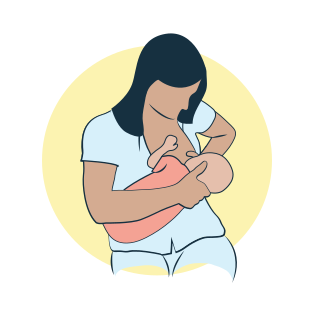
    Cross-Cradle Hold Image

    Cross-Cradle Hold

    1. For the right breast, use your left arm to hold your baby’s head at your right breast and baby’s body toward your left side. A pillow across your lap can help support your left arm.
    2. Gently place your left hand behind your baby’s ears and neck, with your thumb and index finger behind each ear and your palm between baby’s shoulder blades. Turn your baby’s body toward yours so your tummies are touching.
    3. Hold your breast as if you are squeezing a sandwich. To protect your back, avoid leaning down to your baby. Instead, bring your baby to you.
    4. As your baby’s mouth opens, push gently with your left palm on baby’s head to help them latch on. Make sure you keep your fingers out of the way.
    5. Reverse for the left breast.

    This hold is useful when:

    • Your baby is premature
    • Your baby has a weak suck
    • Your baby needs help to stay latched
    • Your baby needs extra head support
    • You and your baby are comfortable in this position
    Clutch or “Football” Hold Image

    Clutch or “Football” Hold

    1. For the right breast, hold your baby level, facing up, at your right side.
    2. Put your baby’s head near your right nipple and support their back and legs under your right arm.
    3. Hold the base of your baby’s head with your right palm. A pillow underneath your right arm can help support your baby’s weight.
    4. To protect your back, avoid leaning down to your baby. Bring baby to you instead.
    5. Reverse for the left breast.

    This hold is useful when:

    • You had a C-section
    • You have large breasts
    • You have flat or inverted nipples
    • You have a strong milk let-down
    • You are breastfeeding twins
    • Your baby likes to feed in an upright position
    • Your baby has reflux
    • You and your baby are comfortable in this position
    Cradle Hold Image

    Cradle Hold

    1. For the right breast, cradle your baby with your right arm. Your baby will be on their left side across your lap, facing you at nipple level.
    2. Your baby’s head will rest on your right forearm with your baby’s back along your inner arm and palm.
    3. Turn your baby’s tummy toward your tummy. Your left hand is free to support your breast, if needed. Pillows can help support your arm and elbow.
    4. To protect your back, avoid leaning down to your baby. Instead, bring your baby to you.
    5. Reverse for the left breast.

    This hold is useful when:

    • Your baby needs help latching on
    • You and your baby are comfortable in this position
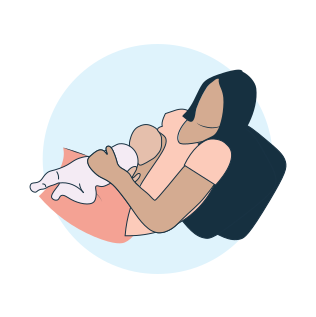
    Laid-Back Hold Image

    Laid-Back Hold

    1. Lean back on a pillow with your baby’s tummy touching yours and their head at breast level. Some moms find that sitting up nearly straight works well. Others prefer to lean back and lie almost flat.
    2. You can place your baby’s cheek near your breast, or you may want to use one hand to hold your breast near your baby. It’s up to you and what you think feels best.
    3. Your baby will naturally find your nipple, latch, and begin to suckle.

    This hold is useful when:

    • Your baby is placed on your chest right after birth
    • You have a strong milk let-down
    • You have large breasts
    • You and your baby are comfortable in this position